The EPM Agentic Readiness Checklist: A Finance Leader’s Guide to Reclaiming Software ROI

Introduction: The EPM Efficiency Paradox
Enterprise Performance Management (EPM) has become the cornerstone of the modern office of the CFO. However, a significant efficiency paradox has emerged: as platforms become more powerful, they often become less accessible to the average business user. Finance leaders are frequently caught between high-cost multi-year subscriptions and low organic adoption, resulting in a “shelfware” crisis where up to 39% of SaaS spending is wasted.
This is a strategic readiness checklist for transitioning your EPM environment from a static, cumbersome tool into an agent-driven growth engine.
Why “More Seats” is No Longer the Answer
The traditional SaaS model relied on increasing seat counts as a proxy for value. But in a landscape defined by AI automation and workforce fluctuations, the “per-seat” metric is breaking.
Complexity as a Barrier: Massive platforms like Workday or Anaplan often require specialized knowledge, creating a steep learning curve that resets between every quarterly planning cycle.
The Adoption Gap: Because the interface is cumbersome, casual users often bypass the system entirely, leading to data silos and a reliance on manual Excel workarounds.
The Economic Shift: With 85% of SaaS companies now adopting usage-based models, the market is moving toward “pay-for-what-you-need” economics.
To solve these pain points, organizations are adopting an Agentic Layer—a simplified interaction interface that sits above complex systems to drive usage and automate workflows.
The EPM Agentic Readiness Checklist
I. The Utilization & Engagement Audit
Before deploying AI agents, you must identify where value is being lost due to complexity.
Quantify the “Learning Curve Reset”: Identify workflows where casual users struggle because they only interact with the tool once a quarter.
Measure Executive Direct-Access: Assess how often your C-suite interacts directly with your EPM data versus receiving static reports via email.
Identify Implementation Lags: Track how many custom feature requests or reports are currently stalled in 6-to-8-month vendor development cycles.
II. The “Switzerland” Connectivity Strategy
Most enterprises operate in a multi-vendor environment. A successful agentic strategy must be vendor-neutral.
Inventory Cross-System Bottlenecks: List tasks that require manual data movement between disconnected systems, such as Anaplan, Workday, and Salesforce.
Audit API Velocity: Ensure your core EPM providers offer robust, real-time APIs that allow an autonomous agent to perform cross-platform orchestration.
Evaluate Partner Support: Assess if your implementation partners (like PlanSimpli) are equipped to build custom agentic capabilities outside the core product roadmap.
III. Agentic UX & Interface Deployment
The goal is to move the work to where your team already exists.
Select a Native Host Interface: Choose a primary collaboration tool (e.g., Slack or Microsoft Teams) to serve as the new “interaction tier” for your EPM data.
Pilot Conversational Inquiries: Deploy a natural language “inquiry agent” to handle common questions like “What is our current variance against forecast?”.
Automate the Close: Target high-friction tasks, such as automated reconciliation and discrepancy identification, to move toward a “continuous close” model.
IV. Economic & Contractual Realignment
As agents replace human seat counts, your pricing model must evolve.
Pivot to Hybrid Pricing: Negotiate renewals that combine a smaller base of seats with usage-based credits for agent-driven tasks.
Align ROI with Utilization: Link software investment directly to the increase in organic usage and the speed of decision-making.
Benchmark “Outcome” Costs: Identify a work-based metric (e.g., cost per scenario run) to justify your total software spend.
Future-Proofing the Office of the CFO
The shift toward an Agentic EPM layer is more than a technical upgrade; it is an economic necessity. By abstracting complexity and meeting users where they work, finance leaders can finally reclaim the ROI that has been trapped in cumbersome dashboards. Those who follow this checklist will move from a model of passive “licenses” to an active “lifecycle” of growth, ensuring their digital tools scale with their business outcomes, not just their headcount.
As the EPM market prepares to cross the $10B threshold in 2029, the focus for leadership must shift from simple software acquisition to maximizing actual lifecycle value. Staying relevant in this expanding market requires moving beyond static licenses toward an agent-led future.
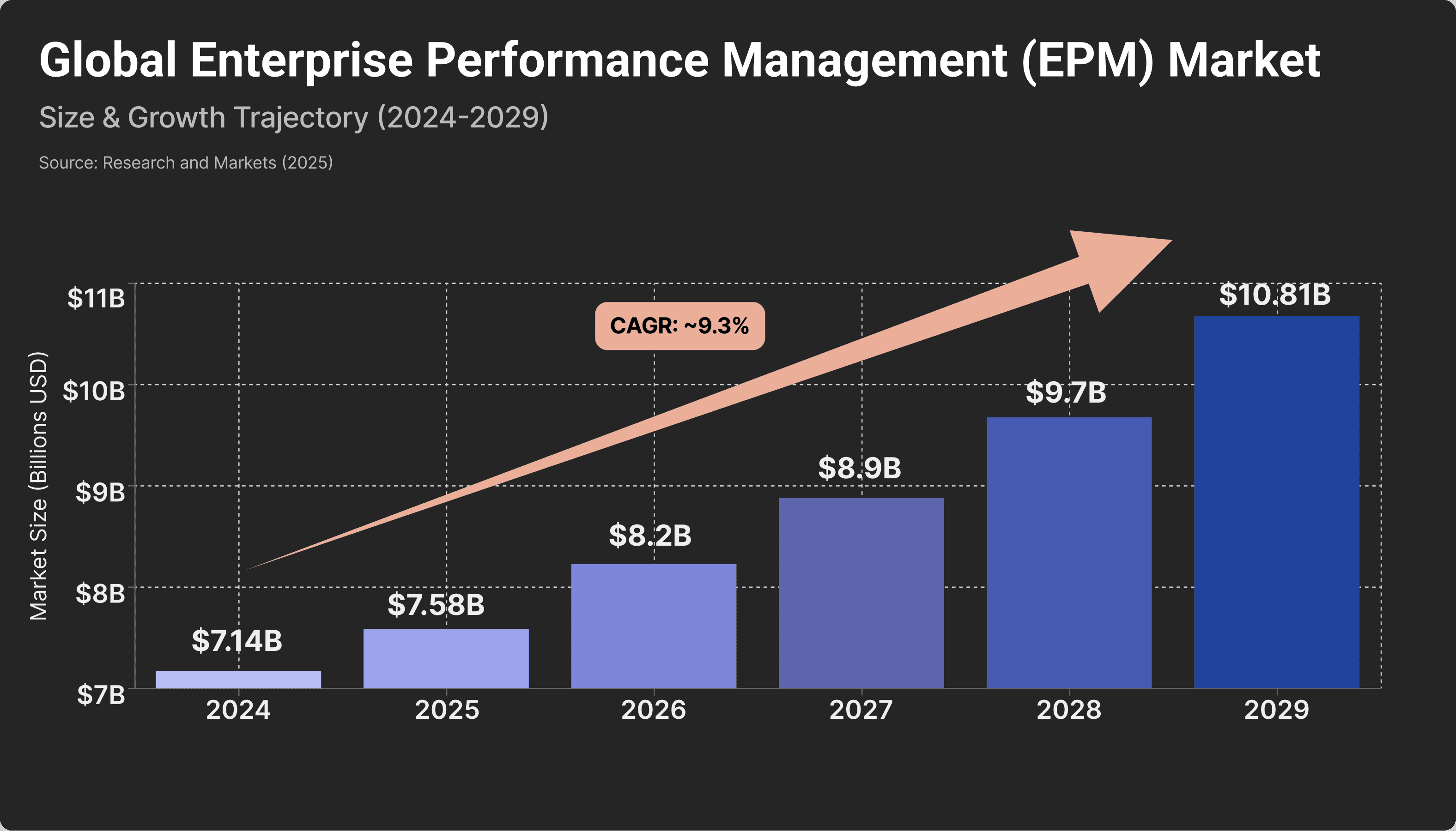
https://www.researchandmarkets.com/reports/5785761/enterprise-performance-management-market-report; https://www.appsruntheworld.com/top-10-epm-software-vendors-and-market-forecast/
Want to learn more about Agentic EPM readiness? Contact us!
Build agents. Trust their outputs. Scale confidently.
MoolAI ensures every AI agent is reliable, governed, and ready for enterprise deployment.
Book your Demo
